
The Origins of Electronic Trading
Modern financial markets have undergone one of the most significant technological transformations in economic history. Before the rise of electronic trading systems, most financial transactions occurred manually through physical exchanges where traders communicated directly on crowded trading floors.
The introduction of electronic infrastructure fundamentally changed how orders were routed, executed and analyzed. Financial institutions began replacing traditional manual execution with computerized systems capable of processing transactions at speeds no human trader could ever achieve.
This transformation created the foundation for what would eventually become high-frequency trading infrastructure.

The Birth of High-Frequency Trading
High-frequency trading, commonly known as HFT, emerged as institutions realized that reducing execution latency could create measurable competitive advantages.
Initially, HFT strategies focused primarily on statistical arbitrage opportunities, market-making systems and rapid order execution.
Firms invested heavily in:
- Direct exchange connectivity
- Low-latency networking
- Optimized execution engines
- Real-time market data systems
- Co-location infrastructure
By placing servers physically closer to exchange matching engines, firms reduced communication delays by microseconds. In highly competitive environments, even the smallest latency advantage could significantly impact profitability.
The Infrastructure Arms Race
As competition intensified, financial firms entered what many described as a technological arms race.
Institutional trading firms invested billions into building advanced infrastructure capable of outperforming competitors through superior execution efficiency.
This led to the rise of:
- Fiber-optic transmission networks
- Microwave communication systems
- Field-programmable gate arrays (FPGAs)
- Kernel bypass networking
- GPU acceleration clusters
Execution speed became one of the primary determinants of institutional competitiveness.
Markets evolved into environments where computational infrastructure and execution intelligence were just as important as financial strategy itself.

Market Microstructure and Execution Dynamics
Modern HFT infrastructure depends heavily on understanding market microstructure.
Market microstructure refers to the detailed mechanics of how orders interact within exchanges and liquidity venues.
Institutional execution systems analyze:
- Order book imbalance
- Liquidity fragmentation
- Bid-ask spread behavior
- Hidden liquidity
- Execution pressure
- Short-term volatility shifts
AI-driven systems continuously evaluate these conditions in real time to determine optimal execution decisions.
Unlike traditional execution models, modern systems can dynamically adapt strategy behavior as market conditions evolve.
The Role of Artificial Intelligence
Artificial intelligence fundamentally transformed the structure of modern high-frequency trading systems.
Traditional HFT models relied primarily on static rule-based logic. While effective during stable conditions, these systems struggled to adapt during rapidly changing environments.
AI-driven systems introduced adaptive intelligence into execution infrastructure.
Machine learning models now analyze enormous volumes of data in real time while continuously retraining themselves using evolving market conditions.
Modern AI systems evaluate:
- Cross-market correlations
- Liquidity shifts
- Volatility expansion
- Execution quality
- Order flow behavior
- Sentiment anomalies
By processing millions of market events per second, AI systems identify short-term inefficiencies faster than traditional infrastructure.

Low-Latency Networking and Co-Location
One of the most critical components of high-frequency infrastructure is physical proximity to exchanges.
Co-location allows firms to place servers directly inside exchange data centers.
This significantly reduces:
- Transmission delays
- Execution latency
- Market data delays
- Routing inefficiencies
Leading firms also utilize microwave transmission systems because microwave signals can travel faster than traditional fiber-optic communication under certain conditions.
The pursuit of lower latency continues driving infrastructure innovation across institutional finance.
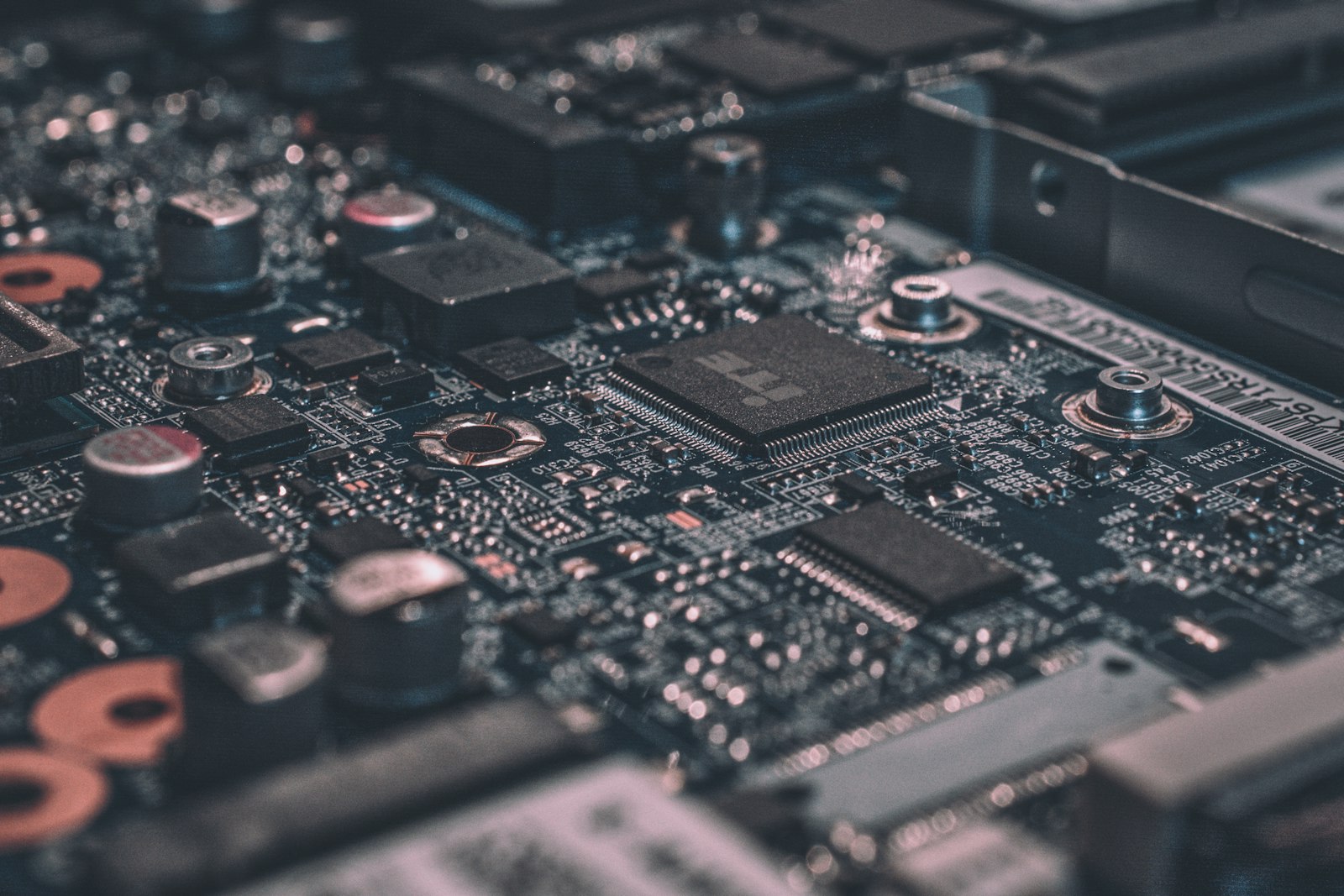
GPU Acceleration and Parallel Computation
As AI systems became more sophisticated, computational demands increased dramatically.
Modern quantitative firms increasingly rely on GPU acceleration to process massive financial datasets.
GPUs enable:
- Parallel computation
- Faster neural network training
- Real-time inference
- Large-scale predictive analytics
Distributed GPU infrastructure allows institutions to analyze complex market behavior across multiple exchanges simultaneously.
Risk Management in High-Speed Markets
Risk management remains essential within high-frequency environments.
Because trades occur within milliseconds, institutional systems must continuously monitor exposure and execution risk.
AI-powered risk systems analyze:
- Position exposure
- Correlation instability
- Liquidity fragmentation
- Execution anomalies
- Market dislocations
Adaptive systems can automatically reduce exposure during unstable market conditions.
This level of automated protection is increasingly important as financial markets become more interconnected and volatile.
Autonomous Execution Systems
The next stage of HFT evolution involves autonomous execution systems capable of operating with minimal human intervention.
These systems combine:
- Machine learning
- Reinforcement learning
- Predictive analytics
- Adaptive risk management
- Dynamic execution routing
Reinforcement learning models continuously improve execution quality by learning from changing market conditions.
Instead of relying solely on predefined rules, autonomous systems evolve through interaction with real-time environments.

The Future of Institutional Trading Infrastructure
The future of institutional trading infrastructure will likely revolve around fully adaptive AI ecosystems capable of making complex decisions in real time.
Emerging infrastructure trends include:
- Quantum-inspired optimization
- Self-healing distributed systems
- AI-native execution engines
- Cross-market synchronization networks
- Advanced predictive liquidity models
As computational capabilities continue evolving, institutions that successfully integrate advanced AI infrastructure with ultra-low latency systems will likely dominate future financial markets.
High-frequency trading is no longer simply about execution speed. It is increasingly about adaptive intelligence, predictive infrastructure and autonomous decision-making.
Upgrade Your Trading Intelligence
Access advanced AI trading systems, institutional-grade analytics and next-generation quantitative research.
Open Dashboard